For small independent house churches the inevitable question keeps coming up :
Who is running the church? What about Pastors? Won’t it all fall apart?
This is a legitimate question and one that we need to assess in two sessions. I believe this next step that the Wide Margin Church is to take is the hardest hurdle of them all. So much of our understanding of “church” is coupled with pastors and ministers. To even think about doing church separate from them is difficult to grasp.
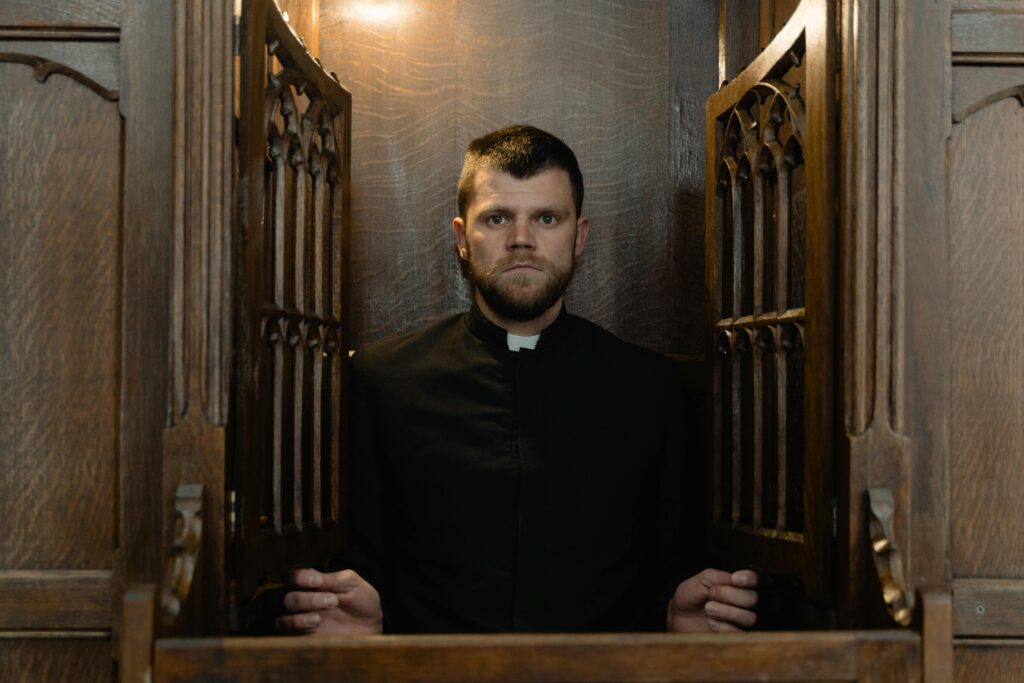
The average person, when they think of church, will think of a building, and then a particular man dressed in interesting clothes. To strip both of those images away is a paradigm shift for people.
So, in this two-part article we will be dealing with the topic of authority and leadership. These are big topics, and much can be said about it. But before we dive into this Fourth Step of our “Wide Margin Church Process”, a few preliminary remarks need to be said.
1. The Wide Margin Field has flattened authority and leadership in general

The Central field had a higher view of authority and centralized leadership in a few. People didn’t question the centre and obeyed its leading. This structure to authority can also be abused. You could have wrong leaders dictating and ruling, with the wider culture unable to get out of it. But today, since the 1960s, there has been a general “flattening” to leadership and authority. Or a better understanding is that leadership has become much more diverse in its practice. We have more types of leaders. We have had women become leaders. New people have arisen who lead, though they do not fit the mold of what we think of as a leader.
Obviously, this flattening, has had some downsides to it. People in authority are challenged more. Trust has diminished. The Government, Police, School Teachers, and Parents have all seen this “flattening” affect their roles. Increasingly it has become harder for people to lead in a dictatorial central way because everyone wants to give their opinion.
But there is some goodness to this. New ideas and gifts were appreciated. Good leaders started to raise up “teams of people”.
So authority and leadership started to shift from a one-man-leadership to a team-leadership.
Bosses started to understand the power of delegation. They knew there was a ceiling to how much they could influence by themselves, and so business started to incorporate teams of leaders to reach new heights. The “flattening” of leadership and authority meant more was achieved and more were involved in the building of their business goals.
Now this has also happened in the church. About 100 years ago most churches would just have one pastor and he would practically do everything in the service. He would always preach, always visit people, a literal one-man show. But now many churches would have an assistant pastor, or a secretary or a youth worker. In other words, leadership became more “staff-orientated”. Teams rather than individuals. But even though this has happened, the church has still retained some of the “pointedness” of authority and leadership. It has not successfully trickled down to the rest of the church members.
But this is where it gets difficult. The culture is becoming against authority and leadership, so what should the church do in regards to these things? This leads to my next preliminary point.
2. We should try and do church that fits our missionary field without abandoning the teaching of the Scriptures

This is the difficult situation for the church. We must be missional and contextualize church in an understandable way for the culture. But we cannot become the same as the culture. The fact is: Scripture has much to say about authority and leadership. So, we cannot swing the other way to things like “individualism” and “anarchy”. We will lose Christianity in the process.
The Scripture themselves are our authority. S0 we need to uphold that. But there are many practices that we do in church that we think are Biblical, when in fact they are just “traditional”. Is it in the Bible to have a single pastor doing everything? So we must uphold Scripture but also see what practices are not actually grounded in Scripture.
3. Authority and Leadership need to be upheld in talking about Church

This is the fact. Scripture talks about these things. So we cannot get rid of them. Having said that, I think the church has gotten “confused” with the terms Authority and leadership, to the point where we think they are synonymous.
That is, if someone is “leading” then they must have the “authority”, and vice versa. I believe that there is a distinction in those words though there is some crossover. So we need to be delicate with this step. We want to be faithful to Scripture when it comes to its understanding of authority and leadership.
So what is the next step that we need to take in regard to the role of authority and leadership? What is a better way of doing church that is both biblical and missional? I will outline the main components of this step, and then I will outline 5 more points of this step in action.
Step 4
From Few Leaders
to Many Leaders

This is the biggest shift to get your head around. Everything changes in your church once you implement this step. It will change how you do church and who does church.
In order to understand this shift from few leaders to many leaders, we need to know these terms that are used to explain this in the institutional church. They are the terms Clergy and Laity. This article is proposing that we are to implement a Laity-led ministry, one where everyone leads, rather than a Clergy-led ministry where only a select few lead.
Clergy
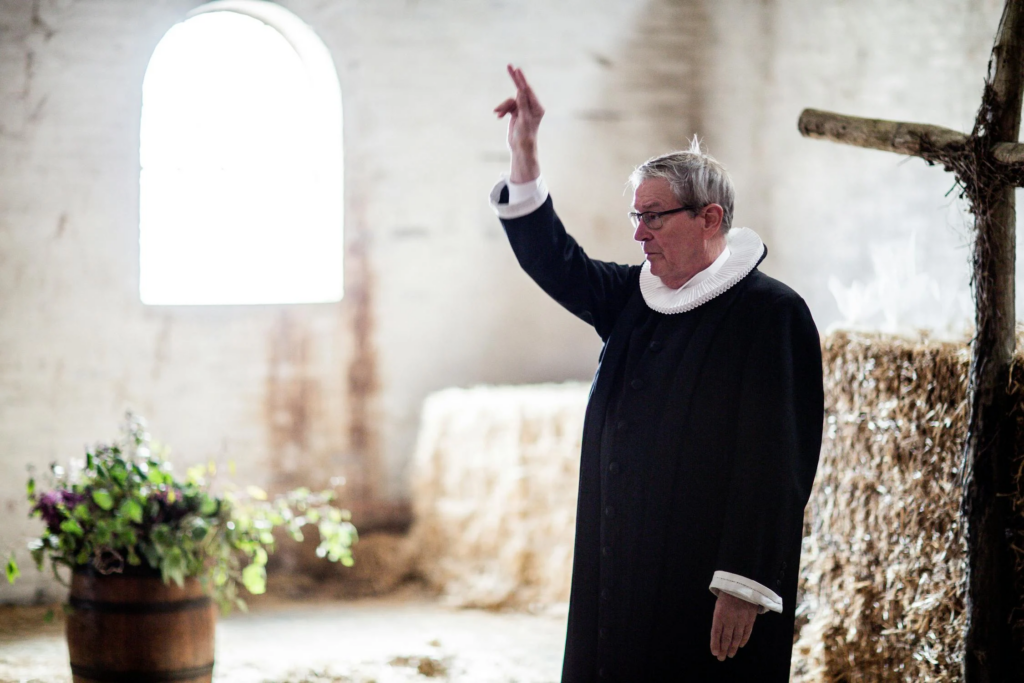
A select group of people who do the bulk of the church ministry. They are considered “ordained” by the church at-large for their role, due to them completing a degree or going through some training, and hence, qualified to be clergy. Usually they are paid, they are up front, and they are in authority and leadership.
Laity

Is anyone else that is part of the local church. These would be committed Christians who may have been at a particular church for a lifetime, compared with a Clergy that may change dramatically every 5-10 years. The Laity are considered not ordained, and unable to do certain elements of the church service because of this.
So what most churches adopt is a Clergy-led ministry, which is similar to the Central Field system. That is, a smaller group controls the larger part of the group.
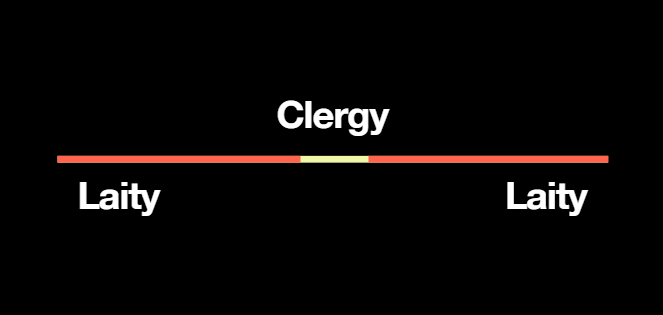
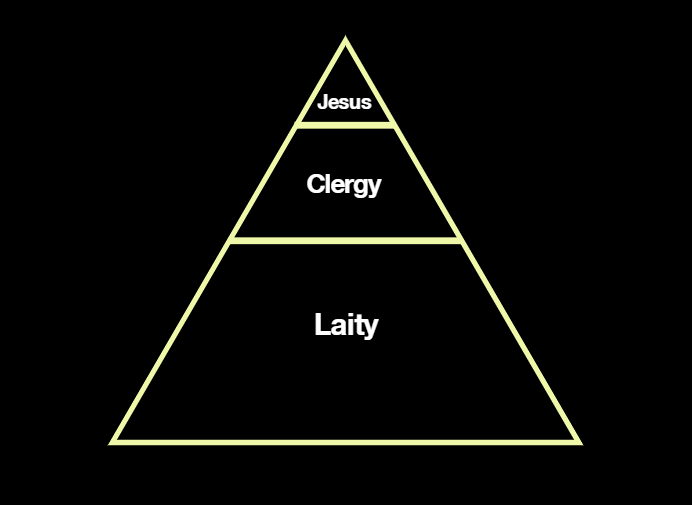
You can also show the Clergy/Laity split like this:
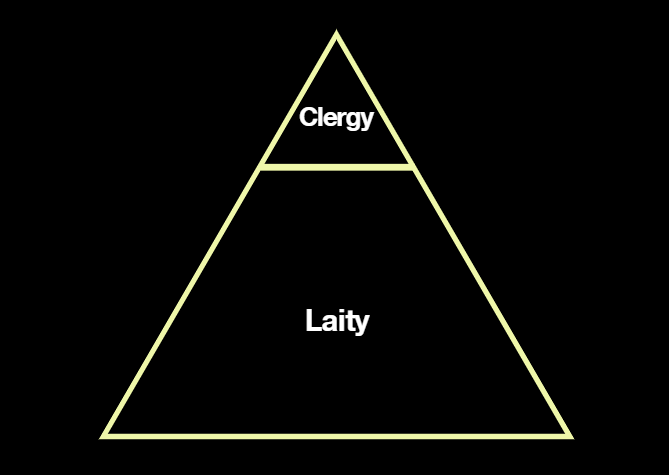
This highlights that the clergy are the smaller part, but also the part in authority and leadership. The laity sits under them.
But when you read the Scriptures it seems to me that there are indeed “functions” in the church, but there are no “positions”. There are people who “lead” but not someone whose position is “leader”.
So in this step we actually want to get rid of the Clergy/Laity split. So there are 3 primary points I want to make about this step, and a further 5 points will be made in session two.
1. Laity-led Ministry is Jesus-led Ministry
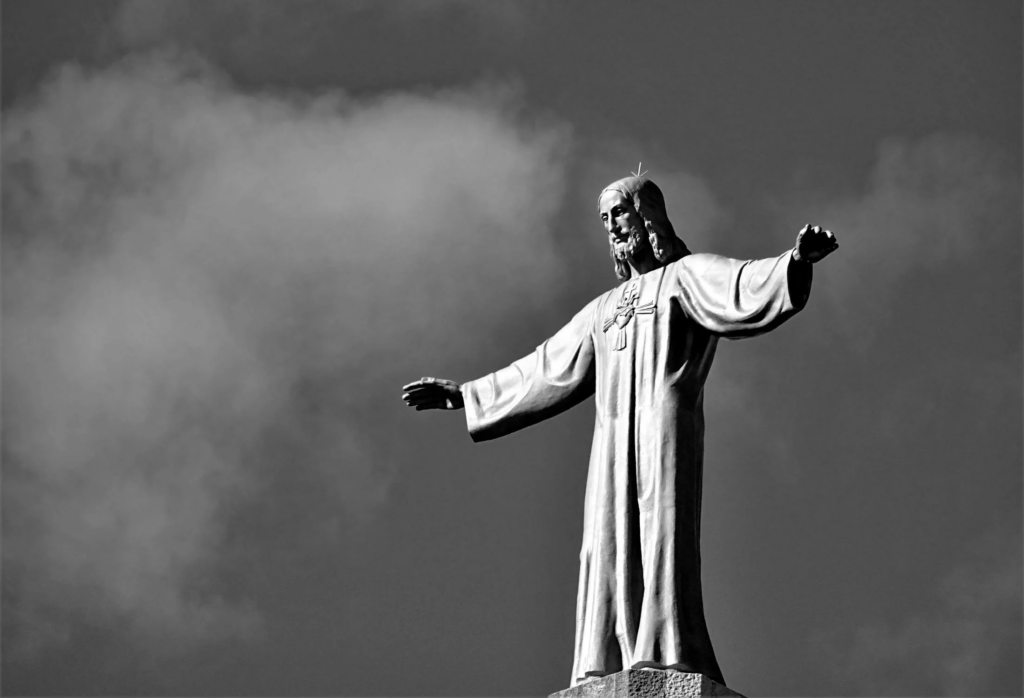
The first point is to show that in all churches, the actual “leader” and “authority” is in fact the person of Jesus Christ. Actually, every church would agree with this point when we talk about leadership and authority.
I believe that Laity-led ministry reflects this truth better than adopting a Clergy-led style. And it’s interesting because one of the pushbacks of organic ministry is that it does not have a senior pastor. But we have to be reminded that Jesus is that senior pastor. He is always present with us when we gather, so “authority” and “leadership” are still there in the person of Jesus Christ.
So when thinking of our pyramid above, if the churches are honest, they know that Jesus is at the head of the pyramid.
But we can go further than this and collapse the Clergy into the Laity as one group. In other words, you have Jesus, and then you have his “disciples”.
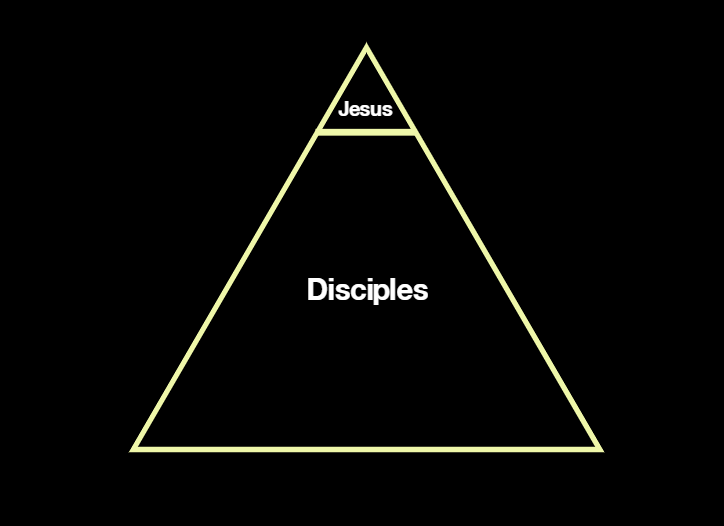
So every church, whether they know it or not, has a leadership structure. The Wide Margin Church has it in Jesus Christ, through the power and presence of the Holy Spirit. So we elevate this authority and leadership properly into Christ. It does not reside in a Pope or a “senior pastor” or staff team. It goes beyond them.
When it comes to Laity-led ministry the gathered people have an understanding that this gathering is in fact under the rulership of Jesus Christ. Sometimes Clergy can get in the way of people seeing Jesus, that the service becomes all about that individual. Increasingly I believe the culture wants to have a clearer access between themselves and Christ, rather than going through Clergy.
2. Laity-led Ministry flattens & elevates Authority and Leadership

It puts everyone on the same playing field. There isn’t Christ above, Clergy second, and then the Laity. Rather it is Christ above, and then everyone else as Disciples. So there is a flattening that happens.
When you have Clergy you expect them to do the bulk of authority and leadership. This then leads to people sitting back and making the Clergy actually do everything in the life of the church.
If the Clergy all got sick at the same moment, most churches wouldn’t know what to do when they met together.
But having a Laity-led ministry will flatten and smooth this out. It’s not concentrated in one or two individuals. It should be much like an orchestra. Everyone is on the same level. Different instruments but all playing together. Christ is the conductor, and we are all equal players with differing gifts.
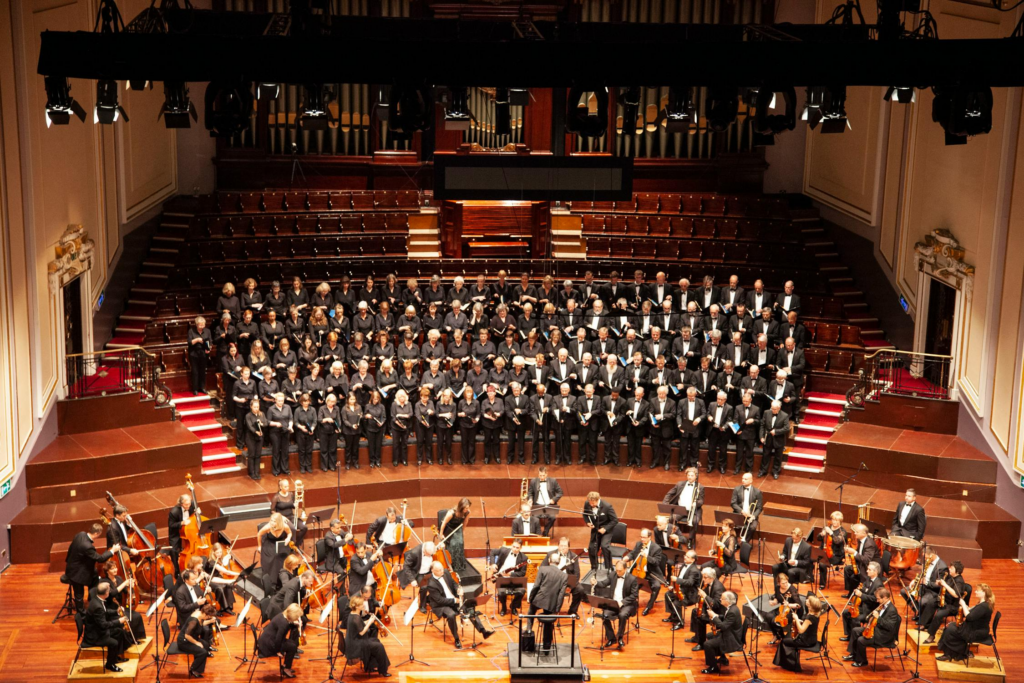
Occasionally there are solos but for the most part everyone is participating. There is no one instrument that totally stands out whilst everyone just sits there. That would not be an orchestra. And neither is there a player with an instrument that never gets to play.
This “flattening” I believe would resonate with the Wide Margin Culture. It elevates each person, and everyone is seen as equal in the mechanics of the church.
In other words, it is a bit of a paradox. It is true to say that no one leads the church. That is the work of Christ. But it is also true to say that we are all leaders in some shape or form. Because the way that Jesus leads the church is through elevating each of us according to our gifts by the power of the Spirit, to then make everyone lead.

So Laity-led ministry elevates and flattens leadership and authority by making Christ ruler and freeing up the laity to lead. Instead of 1 or 2 individuals leading, a proper laity-led ministry would be saturated with leadership.
I think people have a wrong view of what “leading” is. It is one person showing another person how to live, with the hope that that person can now “lead” someone else. Leading is not controlling others but empowering others. True leading making more people lead.
No one leads, because Christ leads.
Everyone leads, because Christ leads.
3. Laity-led Ministry does not mean Elder-less ministry

Someone will cry that the Bible teaches that there are Elders, hence, a Clergy/Laity distinction. But they fail to understand what an elder actually is. The Bible clearly does teach that elders exist, and that there is a distinction in some way. Elders can also be known as Pastors.
So what do we do with this?
I would say that a laity-led ministry does not mean elder-less ministry. A plurality of elders seems to be a desired structure to a church. But people have a wrong view of Elder. They see the word “elder” and think “leader” or “the authority figure”. They then start to see the Elder as synonymous with the one that is in charge and controls everything.
But really, what an elder does is that they are “looking over” the church. An overseer.
Usually, in the early church, they would have been mature, older, male figures, much like a spiritual father of the gathering. One that is mature in the faith and has lived the Christian life for a while and experienced the highs and the lows.
Elders were to “manage” the gathering, to oversee it. They were not lording it over themselves. They were equal to everyone else. They were not going around doing everything. They are like a body part that checks the other body parts to see if they are working properly.
Elders are much like the local lifeguard at the pool. They oversee it all. If things go off course, they deal with it through their maturity and experience. They too are in swimming gear and will jump in when needed.

But it’s not the case that the lifeguard doesn’t let anyone else swim. Think of the pool as “leadership” Everyone gets a turn going into the pool. Even the lifeguard. He doesn’t order everyone out of the pool so that he can be the only one swimming. That’s not a good lifeguard.
So this is the difference between “leading” and “pastoring”, or “eldering”. You can pastor in a way that does not bottleneck leading. A bad elder or pastor will want to do all the leading. But their role is not to lead but to manage and oversee.
Again, good luck being a pastor if you have 100 people to oversee. That’s why Step 4 makes more sense after doing the first three steps. It is easier for an elder to oversee a smaller gathering than a larger one.
It should be more like a large family with a spiritual father looking over the gathering and knowing where everyone is at, encouraging each member to utilize their gifts properly.
From points 4 to 8 I will give 5 areas where going from Few to Many Leaders is more beneficial for the health of the church.
4. From Business to Family

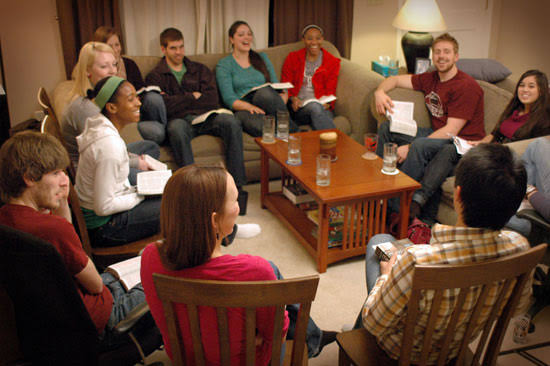
One picture that constantly comes up for church is that of a family. So in some ways, a church is to look like a healthy family.
Now in a family there are things like authority and leadership. But that template of leadership is quite different to a business style of leadership. I believe that the modern day church has shifted from a family-style church to a business-style church. In order to get back to a family-style template each prior step would have to be made.
In the family there are parents and children. The parents are in authority. The children are to listen to them. But the goal of healthy parenting is to help the children grow up and do things themselves. The parent helps them on the toilet, getting changed, feeding them, and driving them. But there will be a day where the child grows and does those things independently. The ultimate goal then, in a family, is for the child to grow up, leave home, and produce their own family.
A church, in some ways, will reflect this. There will be new Christians and experienced Christians. There will be younger men and older men. The young and the new should listen to the old and experienced, not because they are clergy, but they are ahead of them in their faith.
Leadership and authority is then a modelling of that Christian life and being a spiritual father or mother to that person.
Now in this family model it is more laity-led than clergy-led. An unhealthy family would get mum and dad to do everything. A healthy family would have everyone do their bit according to their gifts. Communication would happen with everyone, whilst still holding up the idea of elders guiding leadership in the role of parenting.
But the modern-day institutional church does not reflect this template at all. Instead, it is run like a business. The bigger the better. The more dollars the better. People can get fired. People don’t know the leaders. It is usually all done by the clock.
If the modern-day church wants to look like a family, they need to shrink their size, come into homes, give each group autonomy, and make it laity-led.
Many churches will balk at this. They could not do church the way they would like. They couldn’t have a staff, couldn’t have a paid job, couldn’t have a large building. But that’s where they need to shift their paradigm of what church actually is and what it actually should look like. It’s not a business. It’s a family.
5. From Consumers to Contributors
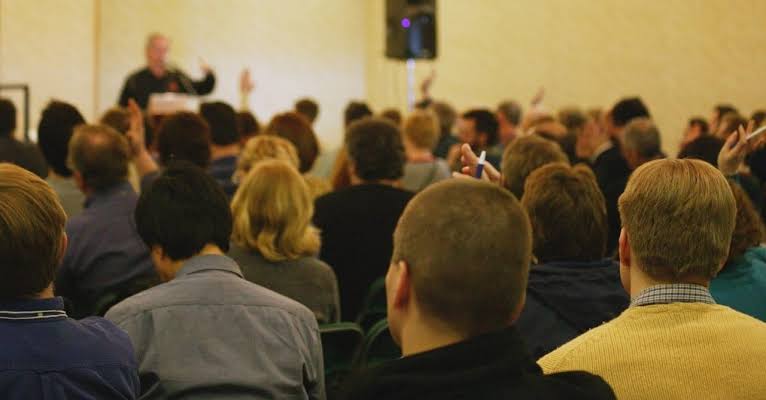
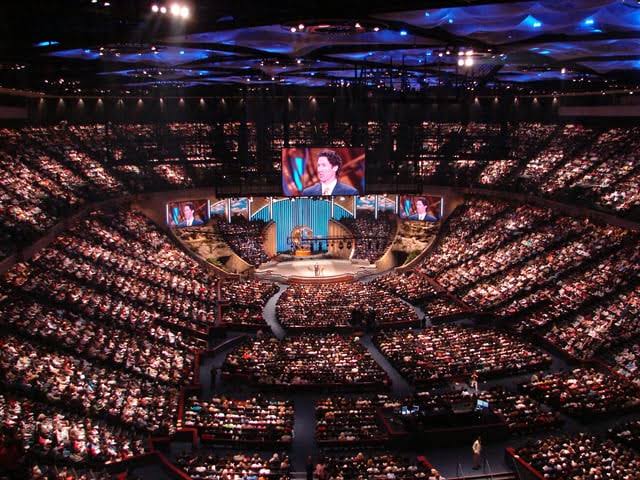
When you have a Clergy/Laity split you inevitably lead people down the pattern of consumerism. Coupled with being in a hall and having many people in a “service”, the Clergy try their best to lead you. But because it is the small running the large then the natural trend will be that many sit back and be passive.
Most pastors would agree with me that this is not a picture of a healthy church. They would want every member to be a contributor and not a consumer. But the methodology of ministry speaks volumes against that.
If you are getting paid by them, and doing the bulk of the ministry, and having yourself be on the stage, and everyone else quiet in their pews, what do you expect from them?
Pastors want contributors, but in order to do that, they know, deep down, they will have to dramatically change how they do church (see steps 1,2,3). They will not like doing these steps because their authority, leadership, and control will be diminished. So much so that they themselves would have to give up the status of “Clergy”, forcing them out of their job, requiring them to find another career. That is just too hard for most pastors to think about.
Some Clergy say they have people contributing. But what they mean is that someone folds sheets, they have greeting teams, someone makes coffee, someone pushes the button for their sermon slides. But that is just contributing to a one hour service or presentation. Contribution is much larger than that. It is sharing the teaching, choosing the songs, sharing your testimony, opening your home, everybody praying together.
Here’s where steps 1-3 help us with making contributors. If you want all to contribute, then you need a smaller gathering. Contributing 30 seconds a fortnight is not enough. So, the size of the church can exacerbate consumerism. If there are hundreds of people sitting and something needs to be done, someone other than you will do it. You can be anonymous. You can just consume in the background. But if you had a smaller gathering, it’s pretty hard to just consume and detrimental to the group if you don’t contribute.
So if it were to be Laity-led, that would lead more to a culture of people contributing rather than consuming. But if it were Clergy-led, they feel threatened if everyone contributes. Hence, for the sake of keeping the church as it is, they prefer Consumerism.
6. From Cafeteria to Potluck


When you have the same people lead, you’ll get the same service. It’ll be the same sort of spiritual food. Church becomes predictable, lifeless, auto-pilot.
I think of modern-day church much like Cafeteria food. Everyone lines up to get the same sort of food each week. There’s no variety. There’s no surprises. The benefit of a cafeteria is that you just show up, pay, and consume. Someone else does all the preparation of the cooking. You just eat.

But increasingly people like to “customise” their decisions. Staff at cafes may get angry with you if you tweak the menus. If you even brought your own food or drink they would get angry. Even if you bring the food back and ask them to add more salt or heat it up they may get angry.
I believe we are witnessing a culture that is starting to get tired of predictability and consumerism. People want to “bake their own cake”.
People want to share in some sort of way. This is where Laity-led ministry is more like a Potluck than a cafe.
In a potluck everyone prepares something and brings it. The intention is that everyone is thinking contribution rather than consumption. Each meal will be different. No two people bring the same thing. No two gatherings will look the same. Potlucks are different, spontaneous, unexpected, and uplifting.
Now because of everyone contributing you will get a few doozies here and there. It will not be as professional or as polished as a cafe. But I believe people are not looking for experts and professionals. They want authentic, raw, undrafted Christians.
Now I must say that potlucks does not mean no preparation. If anything, a laity-led ministry requires more people to prepare their particular gifts. In a Clergy-led ministry only a handful really are preparing something, and even then, what they present, like a sermon, may not feed you well.

Again, the size of the church will help with potlucks. A potluck of 200 people bringing something may not be feasible. You could never get through everyone’s dish. But a potluck of 10 people, that would make more sense.
If anyone hasn’t noticed, I am not necessarily talking about food. I am talking about people preparing something and bringing it for the edification of the group. That could be actual food, it could be a song, it could be a teaching. Everyone pitches in making it a potluck experience.
A Clergy-led ministry running like a Cafe may have predictable polished plates, but they are robbing a vast amount of people bringing their own talents.
7. From Visitors to Members

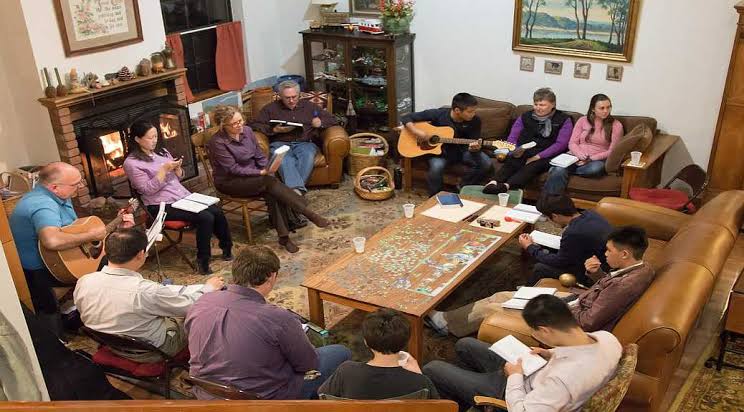
The Clergy/Laity split always makes you feel you are a visitor. You are coming to a show that “they” put on. You are a visitor, they are the performer. You are coming to their domain and their stage and sitting down. Even at the end of the show you all walk out and shake hands with the Clergy.
But with a Laity-led ministry you don’t feel like a visitor. You all are on the same page. You are a member, a part of this body that actually gets used. The clergy are happy to use their own parts. They don’t need you to function. Why? Because you are a visitor. But with a smaller Laity-led ministry, when you are not there, the group “feels it”.
Now many Institutional Churches do have “membership” but it’s more of a loose term. Much of it is that you agree to give money to the church, get a name tag, and tick the box that you agree on the doctrinal statements of the Clergy. You are still more like a Visitor.
But with a Wide Margin Church that does steps 1 to 4, you do feel and act like an actual member of the gathering rather than a visitor. I believe that this in fact is closer to the idea of church in the early church. All that were there were contributing according to their giftings, building up the body of Christ in their smaller gatherings.

One of the major problems with Clergy-led ministry is that if the Clergy are not present, people think they are not doing church at all.
They don’t know what to do because they are, in reality, visitors coming to see a show. Too much of the church’s function is in too little of the group.
So true Wide Margin Churches should flatten and elevate leadership and contributing to the point that if one particular member is not there, the body can still function properly. If all is invested in one guy, and he takes up 80% of the function of the body, if he isn’t present, you will feel it.
8. From Bottling Up to Building Up


The goal of the church is that of building up each other. Jesus does this by being present by the power of the Holy Spirit working through every member to utilize their gifts for encouragement.
Clergy-led ministry, instead, bottles up. They are like a bottleneck on the whole process of leadership. Instead, they run the show and user their gifts at the expense of everyone else sharing their gifts.
So we need to do church in a way that promotes the equipping and working of the whole body. Having lesser people, meeting in homes, decentralized from other gatherings, utilizing a laity-led format, I believe will unlock the gifting and building up of the church.
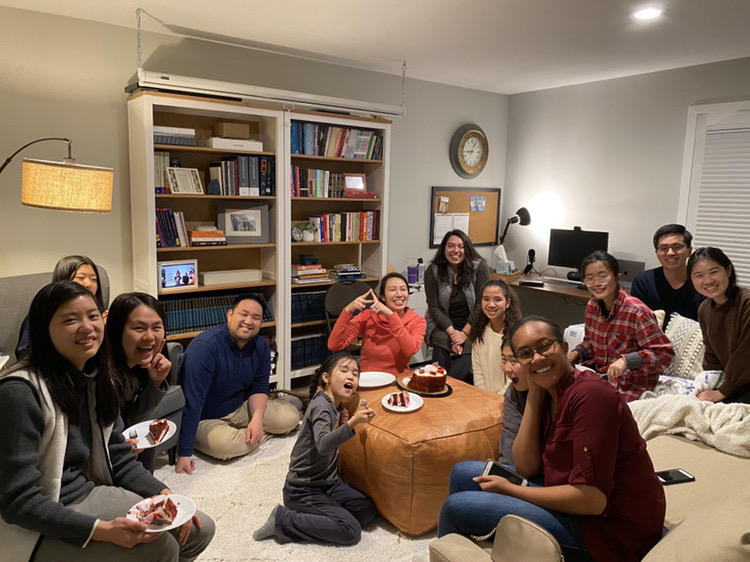
So this has been a lot of points about the role of Laity-led ministry. As we are in a Wide Margin Culture, I believe this will connect with them better.
If everyone is leading and growing, imagine what ministry and discipleship we could do? Imagine the growth of gifts? Imagine the building up? Imagine the various “Potlucks” we could do?
Clergy-led ministry is a dead end.
It breeds experts talking to consumers, rather than role-models making contributors.