This step, I believe, is one of the most difficult to get your head around. This, at first glance, seems to run against the grain of what our culture wants today. But deep down, I believe that this culture craves this step and more importantly, needs this step.
We have seen that when a church comes together, there are many elements to be done in the space provided. Sharing, praying, learning, listening, singing and so forth. If this is to be done well, one person will realize the inevitable question:
How long is church to be?

The length of church is something that needs to be addressed. It’s actually quite difficult to think about church in a different way because we have gotten so used to a type of church that functions as a 90-minute thing. But, having looked at what church could look like in the other steps, the duration of church can be one addressed in a different light.
This step has much to unpack. First we will address the issue and reveal the step. Next we will outline 6 key benefits of this step that will help make discipleship happen.
With institutional churches the idea of “duration” comes up in many facets.
Usually, because of the way that we have gotten used to church, the duration of it has created much stress. Here’s a few examples of, what I like to call :
Duration
Pressure Points
1. Service pressure
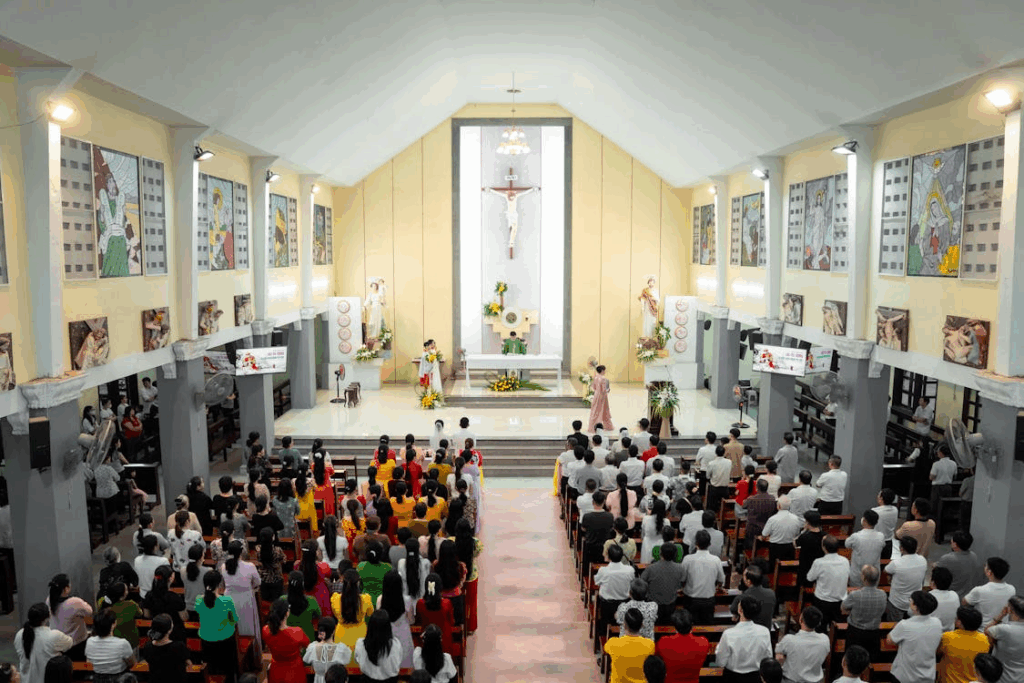
Many churches out the front on a sign will say when it begins and when it ends. If you come early to church you will see church not started yet, or people practicing music for it, or even the building itself is not open yet. Also, once the service hits that end point, people are expected to leave.
Now sometimes there is talk of a formal and informal part of church. The formal part would stick to the allotted times, but then the informal part is where chatting and catching up can happen. But even the informal part of church will have its expected closing point. Most churches will not go beyond the 3 hour mark.
2. Sermon pressure

Because of the beginning and ending of the service, the sermon, or message, is something that can change its duration easily. Therefore, many pastors will write out their sermon and practice it to make sure it sticks to the allotted 25 minutes. There will always be this “duration pressure point” if it goes beyond that time. Many pastors have done a great sermon only to get the feedback that it was 5 minutes too long.
3. Building pressure

Some churches cannot go beyond 2 hours because they are paying money for a particular space for only 2 hours. If they do go beyond then there could be monetary or locational consequences. So there is this “pressure” to make sure that church is short. Other churches may not have the luxury to continue meeting as there may be another church service that requires the building at a certain time. So, in order to respect them, you must wrap up what you are doing in an orderly manner.
4. Lunch pressure

Every church in the morning needs to attend to this. Because lunch is usually in the vicinity of 12-2, this creates a wall to how long a church service can go for. Some churches do put on lunch, but due to the size of the congregation and the building, this requires much effort. Many churches will finish and each person would go back to their own place for lunch.
5. Sunday pressure
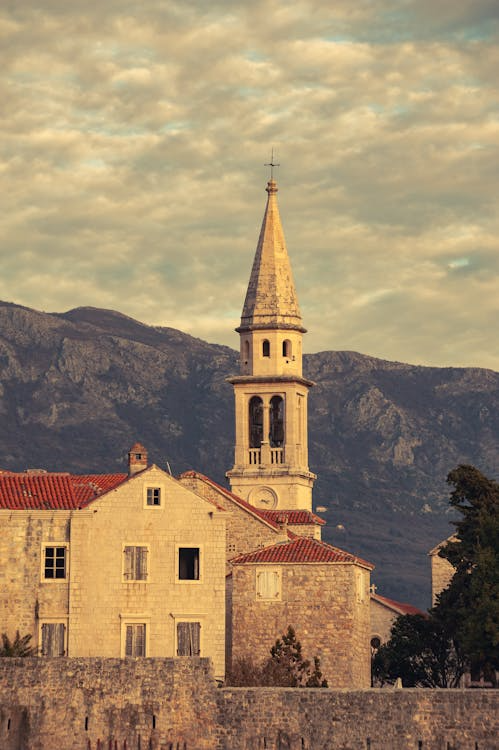
The greatest problem with church is it is stuck with this Sunday show time slot. This is something we must shake off. Because church is usually you going somewhere and sitting down and watching something, the feel of church is similar to going to the movies or going to a football game. There’s a definite beginning and an end.
This is the heartbeat of “entertainment”.
So church has this “set time” in our head. To even think of “church” outside of that 1 hour show is very hard for people to grasp. Anything that goes longer than 1.5 hours will feel like it is too long. It is like watching a performance that goes well beyond 3 hours. You would be itching in your seat. You cannot be passive like this for too long.
Now there is nothing wrong with limiting church just to one day of the week, but it will change the way you think of church.
Imagine if there was a church service every day? You might say that that would be overkill. How could the pastor prepare 7 sermons a week? People couldn’t handle listening to a sermon every day. The reason why we struggle to extend the duration of church is because people are used to church being relegated just to one small time slot in the week.
I believe that one of the reasons that we have “restricted” church to 2 hours on a Sunday is because of the sheer complexity of it. It’s hard to get 100 people into a church building on a Sunday morning. It’s hard to prepare a 25 min sermon once a week. It’s hard to sit in a pew for 2 hours. It’s hard to cater to 100 people with food. And so, we only do church once a week.
Here’s the thing: The goal of church is to make disciples.
Now the issue is that if we don’t have much “church” I believe this will impact making disciples. Time and energy are always connected with things you grow and learn in. So if the church of today wants to excel in making disciples, we need to have a different understanding of when church is on, and for how long.
Relationships take time, skills take time, a good meal takes time, exercise and health takes time. Discipleship, also, takes time.
The current way of how we do church will not make good disciples.

Think of it like a gun with one bullet in a chamber of 7. Most of your “fires” will be no events. Your momentum of shooting bullets never happens. That is what church is like if it’s in one slot out of 7 days.
Now someone might come back at me and state that churches are to be like that anyway. They see church like “fuel”. You, once a week, go to the petrol station. You “fuel up”, pay your money, and leave. This is their view of church. Attend, fuel up, then leave. The fuel of the sermon and singing helps you to be the Christian for the week, until you need a “top up” again. Hence, once people have topped up their fuel, there is no more need for church. I’m fueled up.
Imagine if the fuel guy, once you’ve fueled up, wants to have a conversation with you. Or if the doctor you meet, after treating you, wants to keep chatting.
What if people have the wrong view of church? Church isn’t meant to be fuel for the week. It’s not just information. Church is to be transformation.

It’s not fuel time. It should be “family time”.
So this sixth step will completely change how we think of church. As I said before, I believe that this step is the hardest to get your head around. But if we do manage to think of church in a non-fuel way, then this, I believe, will make discipleship go on fire.
Step 6 :
From Short Church
to Long Church

This step will unlock many benefits that the institutional church does not touch. But I want to address the elephant in the room. When someone hears that word “long church” they immediately will groan inwardly. The reason they do that is because they know, that the current way of doing church, cannot go longer. It is short for a reason, due to its complexity and passiveness and the resources.
They would even come back at me and say that people do not have the time to have a longer church. I would say that we do have the time. Due to the mobile phone and entertainment, we are in the habit of wasting a lot of time.
Now if we put a little time into church, then you will get a little out. I think we need to think of church gatherings in a completely different way.
Now, before we look deeper into this step, I am not proposing that church should just be a longer version of what it is. We need to stop thinking of church as an event.
So here are 6 key points that will help us understand what we mean by “long church”.
1. Flexibility
Closed to Open

If you are to gather at a particular space the more open it is the better. Even though there are many benefits of having a start and ending time, it can, just by its very nature, create a duration pressure point. Those that come a little late feel guilty and those that have to wait for them feel somewhat annoyed, even if it is only 5 minutes of someone being late. Similarly, when church is to finish at a particular time, anything that goes over that can feel morally wrong.
So keeping the gathering “open” rather than “closed” is a way around that. But I will say that this “openness” should not be enforced. If an individual needs to leave early then let them leave. If someone wants to stay longer, and there are grounds to stop the gathering, then that person needs to respect the group or the host. It is this idea of being flexible with each other and respecting each other. Let’s not be bound by the clock but more to do with where the people are at.
In other words, church should be closer to a “pop in, pop out” culture.
It is not a set time, but rather, the group is flexible to make the gathering pop in and out wherever and for any particular time. If a certain individual cannot make a gathered time, then the wide margin church is built in a way that can be flexible to fit into any other slot where that person can still gather. The church is not bound by a morning or a Sunday or a particular one hour period. Flexibility is the new currency we must do. Go with the flow. Go with the pattern of where people are at.

Again, if you think of church in this set time, then anyone coming late will miss things, and anyone adding things in the gathering will make it feel rushed. Let’s take away the clock as an enemy. Now a group may all agree to work in a particular closed framework. That’s fine. As long as it has the ability of being flexible, where certain situations may change how they do church.
2. Community
Programs to People

Church, at its core, is about people coming together. I think many people primarily think of church as a program that has a particular tone to it. But the wide margin church should be one where relationships comes first. Community and people rather than programs and structure.
Community really is a big deal. Deep down every single person is starving for a community. But I believe the cultural field that we find ourselves in has gone away from this, due to technology, relational breakdowns, and such. Hence, having a church that focuses on the community of the people is very alluring for todays world.
People are not interested in programs anymore,
but rather relationships.
The problem is, the way that we have done church for many years has been tightly tied up to a particular set of programs, that it is very hard for us to think of church detached from this. The program of meeting at a particular time and day and having a sermon and having 3 songs has started to dominate and dictate how the relationships are done. Any spontaneity is gone and everything is predictable. Even the casual chatting is stunted due to it having to fit into the program structure like a straight jacket.
Instead, we should make community determine what church would look like, opening up a range of possibilities that suit the person first rather than the program.
So this key point is to think of the person first. Programs are good but they have to be subordinate to community and people in general. If you find it hard to think of a church that is community rather than a program just think of church just being casual.
3. Diversity
Event to Lifestyle

Stop thinking of Church as an event on a sunday that goes for an hour. Rather, start thinking about church as a lifestyle. Instead of church as this one event where everyone comes to a place and worships for an hour or so, we need to think of church “sprinkled” throughout the whole life and week of a person. It is a lifestyle rather than a service.
It’s not an on/off switch but a heartbeat and rhythm to your life.
There shouldn’t be this strong delineation of “this is doing church” and “this is not doing church”. I am not suggesting that everything you do is church, but I am suggesting that the idea of “church” is more diverse than we think. We have this idea of formal church and informal church. The informal is just as much “church” as the formal.
Church is not supposed to be just on a sunday but on everyday. You want people to ask you, “When does your church start?” And for you to answer, “It doesn’t really start and stop. It’s this lifestyle that this community has.” Increasingly we need to have churches like this, that form more like a music band or a gang or a group of friends that hang out. There is no beginning or end. It just is this lifestyle of any day anytime.
Some might come back at me and say that this sort of church just sounds like a group of people just having a bible study together. Rather, this is just a group of people sharing Christian lives. Meals are made, conversations are done, relationships are forged, shows are watched, serving is done, and so forth. This could even be the mundane things of life. It could be doing shopping together, giving someone lifts to places, playing games.
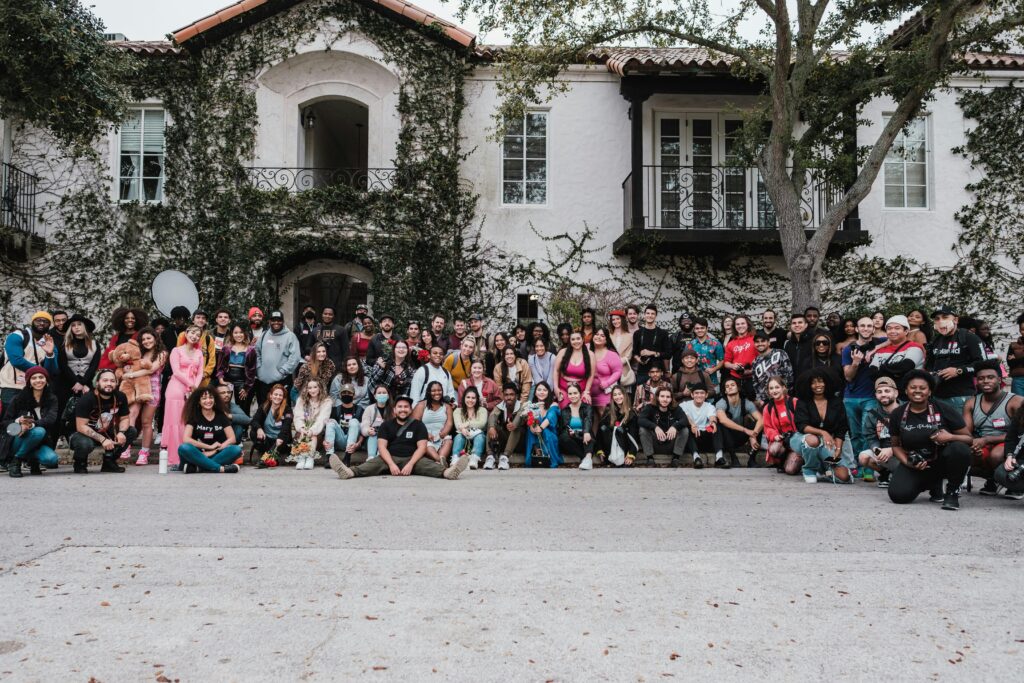
Once someone sees church as a lifestyle, it takes all the pressure off of meeting at this particular place and time-looking. Each church group should go with the flow of the community and have it connected to their everyday lives, rather than an on-off switch.
4. Frequency
One Big Rock to Stepping Stones

The key to a successful wide margin church would be one that has frequency to its rhythm. Many of us in the institutional church have gotten used to church being this large chunk in our week, the sunday, with little to nothing else throughout the week. Much like someone filling up the fuel in a car for a week, we think of church like this.
One of the reasons that we have gotten used to church like this is that we have this big rock of church in our week, and then we are free to do other things that we like. The problem is this idea of priority.
Slowly this big rock has gone from 3 hours of your Sunday to 2 to now 1 hour. The infrequency of church is a problem.
Rather, much like how we eat, we should have a smattering of church everywhere in our week. That is, we should go from a big rock version of church to a stepping stone version of church.

One of the reasons for this type of church is that things do come up. People do get sick, or various other reasons can make a person miss your “big rock” on the Sunday morning. If this happens, you can go 14 days without any sort of church community. In the world that we now live in, frequency is key. Hence, we should set up a church much like stepping stones so that, if something does come up, that person isn’t missing out on everything that your church does.
What sort of different stepping stones could you have? There could be a gathering just for prayer, or a continuous message board, or pop ins for meals. A shared time for dealing with groceries. Hobbies could be done together. The group can decide what that looks like. The key is that there is a sort of frequency to the group, adding to the church gathering being one that is long rather than short.
5. Proximity
Far to Close

One thing that will help us do church in a long and lifestyle way is to be physically close to each other. That is, proximity leads to community. If people are far away, and have to drive to come to you, this will make church more like a Rock than Stepping Stones. Ideally, if you can walk to them, this is a sign of closeness.
The more proximity the better.
Say it was someone in the same apartment building or street. That would mean things like pop ins and mundane things would be easier and more natural to do. The further away, the harder to do. That’s why country towns may find doing house church easier because of this proximity.
The extreme example of this idea of proximity would be to live together. That way, your whole life is “church”. Many groups today and in the past have produced this sort of proximity and have reaped much benefit from it. This, however, is not an option for everyone, though with the increase in housing and rent, I believe more families will co-live together in the future. Proximity and closeness does have merits but also brings difficulties.
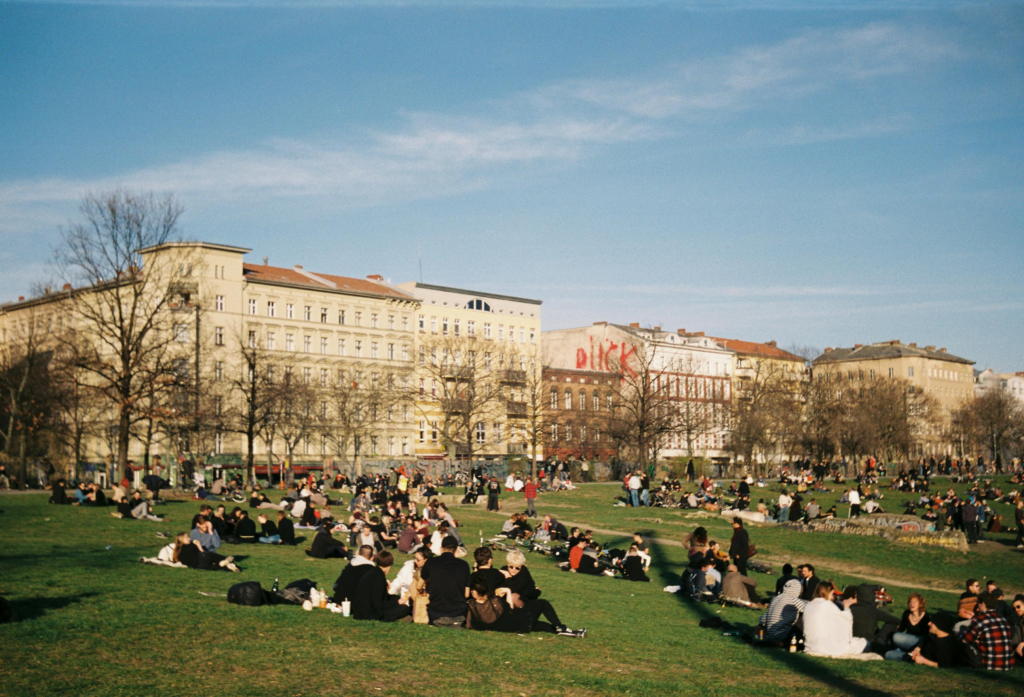
Actually, the institutional church does get this “proximity” sometimes. When there is a church retreat or camp, instead of the church meeting for just 2 hours that week, they are mingling with people for 2 or 3 whole days. It is like putting the church into a time-machine and increasing the proximity and community connection. Now obviously the church cannot keep reproducing this sort of church camp lifestyle. But a wide margin church could.
The point of all this is that the church needs to be closer. Pastoring and caring and knowing takes time. The distance of your gathering will impact on that greatly.
6. Family
Factory to Family

We have all gotten used to Factory Churches. They are the ones that are perfectly designed. The chairs are out. The people are in rows. Everyone sings at the same time. People stand together and sit down and be quiet. It starts perfectly on time and ends perfectly on time. The conversations are shallow and machine like. It’s short and punchy, and people are out of the door. The sermon always goes for 20 minutes. It is predictable and similar each week , much like a factory.
Many people and pastors actually enjoy a church that caters this way. But I would say that this is a sign that church, functioning like a factory, is not a priority in the life of someone. It needs to be longer. But the institutional model sees “length” as a problem. See, the longer something is, the more unpredictable and messy it becomes.

Pastors like programs and sermons and services and halls precisely because it keeps church functioning like a factory.
It is much like going to the doctor. Just give me the medicine and I’ll be on my way.
Now in defense of the factory-like style of doing church, many churches have no choice but to do it this way. The service needs to be quick and clean and machine-like because there’s another church or service straight after yours. Or, due to the hall, some places need to spend a lot more money if you want to keep the lights on for longer. The incentive is, that once this particular time hits, we turn off the power because we don’t want to pay more money. Churches then are forced to play this particular factory game. The program needs to be tight, no fluff. Some people rehearse their sermons and make sure it sticks to 20 minutes.
The problem is: It is not a reflection of true life. Life is messy. Church needs time. It needs to be unpredictable. Why? Because it is family first rather than factory first. People have difficulties and church needs to be a space where you can unhinge yourself and say how you are going.

If you are running a church that is like a factory, where everything is on time, and all programs run smoothly, and songs are performed well, and the sermon is never long, I can guarentee you that people don’t know each other as brothers or sisters but as cogs. The only way to get that “family feel” is to get away from the factory style of doing church.
Make it long. Make it messy. Make it unpredictable. Make it people.
This cannot be done in an hour. It takes time for families to happen.
I believe that the culture of today, deep down, wants a “long-form” version of church. One that is messy, unstructured,. One where you can pop into any time. A stepping stone church. Another family.
But to make this a possibility you’ll need to do the previous 5 steps. Making a long church without dealing with the steps will be very difficult to do.
You need to be small
You need to be in a house
You need to be decentralized
You need to be laity-led
You need to do dialogue
As I have said, the great benefit of long church is that this is the best way to make disciples that will last. It all takes time. It requires a lot of energy and effort. But is it not worth it? Isn’t this what church is supposed to be like?
It is doing church this way that, I believe, will unlock the final step in the wide margin church. This is where real numerical growth can happen. One that can take over the whole world.